

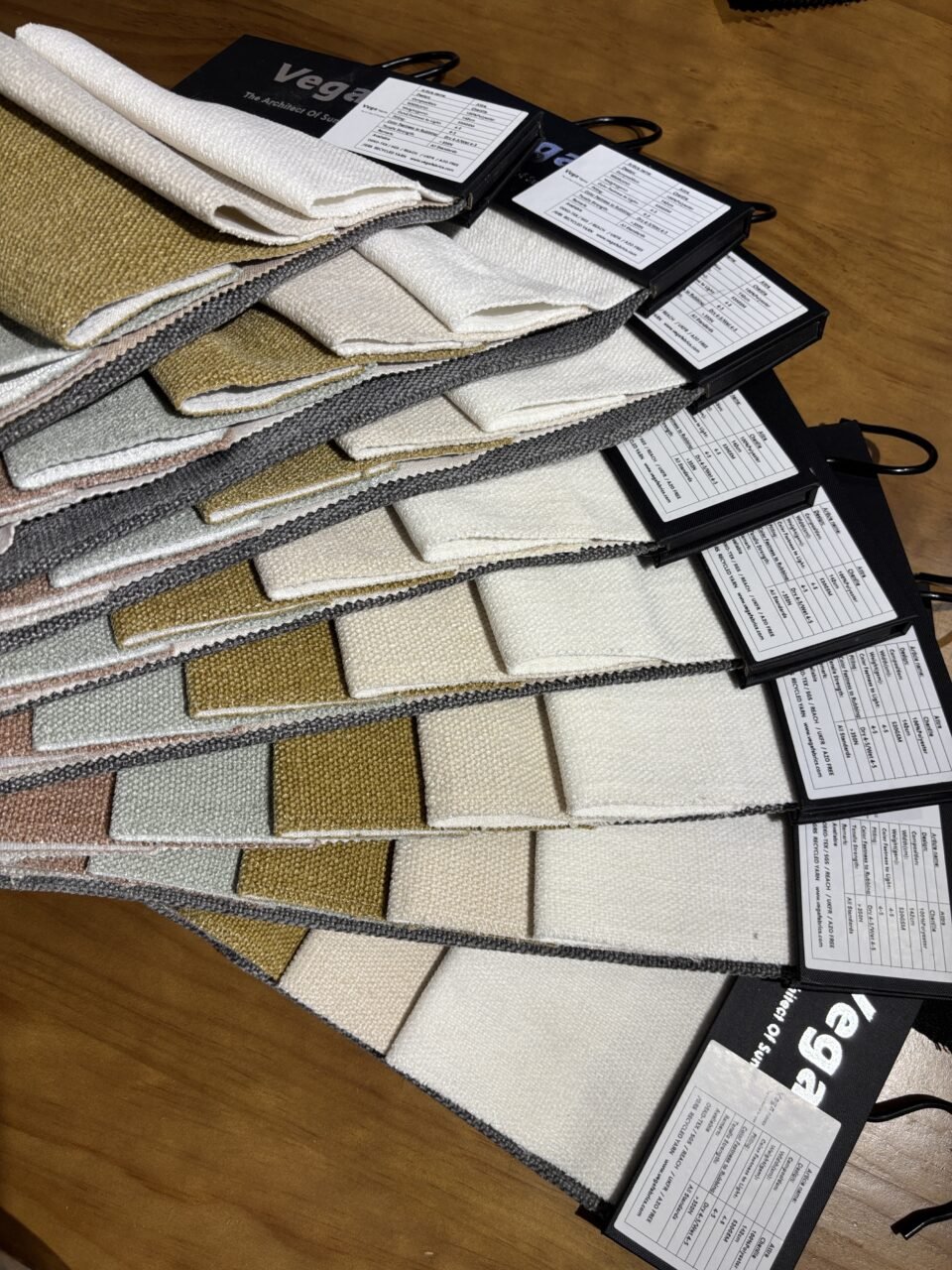
How to Choose Upholstery Fabric for Sofas: A Buyer’s Guide
Selecting the right upholstery fabric is a critical decision for furniture brands, sofa factories, and wholesalers. The fabric affects aesthetics, durability, maintenance, and ultimately customer satisfaction. Here’s a focused guide to evaluating upholstery fabrics—covering material types, technical specs, certifications, and supplier selection.
1. Know the Main Fabric Types
Chenille – Soft, durable, and versatile. Its velvety texture resists pilling when made with quality yarn, making it ideal for mid-to-high-end residential sofas.
Velvet – Rich and elegant, modern polyester velvets are stain-resistant and durable, perfect for premium or designer pieces.
Faux Linen – Offers the natural, textured look of linen with better wrinkle resistance and lower cost. Popular for Scandinavian and minimalist designs.
Boucle – Trendy, looped texture with a cozy feel. Heavier weights (460–530 gsm) work best for full upholstery.
2. Check Fabric Weight (GSM)
GSM (grams per square meter) directly affects durability and handling:
200–350 gsm: Cushion covers and throws
350–450 gsm: Light-use sofas
450–550 gsm: Ideal for everyday residential sofas
550+ gsm: Commercial/contract use
For most manufacturers, 400–530 gsm balances durability with ease of cutting and sewing.
3. Evaluate Durability via Martindale Test
The Martindale rub test measures abrasion resistance:
15,000–20,000 cycles: Light domestic use
20,000–30,000: General domestic use
30,000–40,000: Heavy domestic use (families with kids/pets)
40,000+: Commercial and contract use
Aim for 30,000+ cycles for long-lasting sofas.
4. Look for Certifications
Ask your supplier to provide documentation that is specific to the product and valid for your market:
OEKO-TEX® STANDARD 100 – ask for the certificate number, issuing body, product class and validity, and verify it in the official label check. It covers harmful-substance safety, not physical performance.
REACH (EU chemical regulation) – ask for the supplier declaration or test report that applies to the construction and finish you are buying.
GRS (Global Recycled Standard) – for recycled-content fabrics, ask for a Transaction Certificate for the specific batch, issued by the certified mill.
5. Prioritize Customization
Off-the-shelf fabrics rarely meet exact brand needs. Look for suppliers offering:
Custom colors (Pantone matching)
Custom GSM (adjust weight per application)
Custom jacquard patterns for exclusive designs
MOQ transparency – confirm the minimum per quality and colourway, and whether stock qualities are exempt
6. Always Test Samples First
Before bulk orders, evaluate samples for:
Color accuracy under different lighting
Hand feel and comfort
Pilling resistance (rub fabric against itself)
Stretch and recovery
Lightfastness (test fading in sunlight)
7. Choose the Right Supplier
The best fabric is useless without a reliable supplier. Evaluate:
Production capacity and scalability
Lead times and delivery reliability
Batch-to-batch consistency
Responsive communication
Export experience to your target markets
About Vega Fabrics: Established in 2016 and based in Shanghai, Vega Fabrics is an upholstery fabric supplier working with long-term partner mills. We supply chenille, velvet, faux linen, bouclé and jacquard fabrics for furniture brands, sofa factories and sourcing teams across Europe and the Middle East.
Working with us: MOQ is typically 800 m per colour; selected qualities start at 300 m, some require 1,000 m or more, and in-stock fabrics have no MOQ. Complimentary swatches are available (courier costs are covered by the buyer) in A4, 30 × 30 cm and metre sizes. Quality samples take 10 days and lab dips 7 days; bulk production takes 30–60 days after sample approval. We work with EXW, FCA, FOB, CFR, CIF and DDP (Incoterms 2020), shipping from Shanghai or Ningbo. Composition, weight, width, colour and finish can be developed to your brief, Pantone reference or physical swatch. We reply within 2 business days.
Compliance you can verify: OEKO-TEX® STANDARD 100, certificate no. 24.HCN.96423, issued by Hohenstein Laboratories GmbH & Co. KG, Class II (products with direct contact to skin, Annex 6), valid until 30/09/2027 — verify the certificate number at oeko-tex.com. STANDARD 100 addresses harmful-substance safety only; it does not cover physical performance such as abrasion, weight or flame retardancy. GRS documentation for recycled qualities is issued by our partner mill and requires a Transaction Certificate per batch.